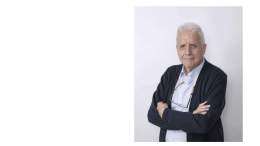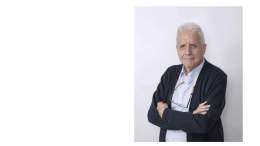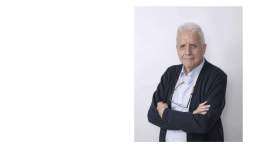


IBF welcomes Sergi Padilla-Parra as a new Ikerbasque professor
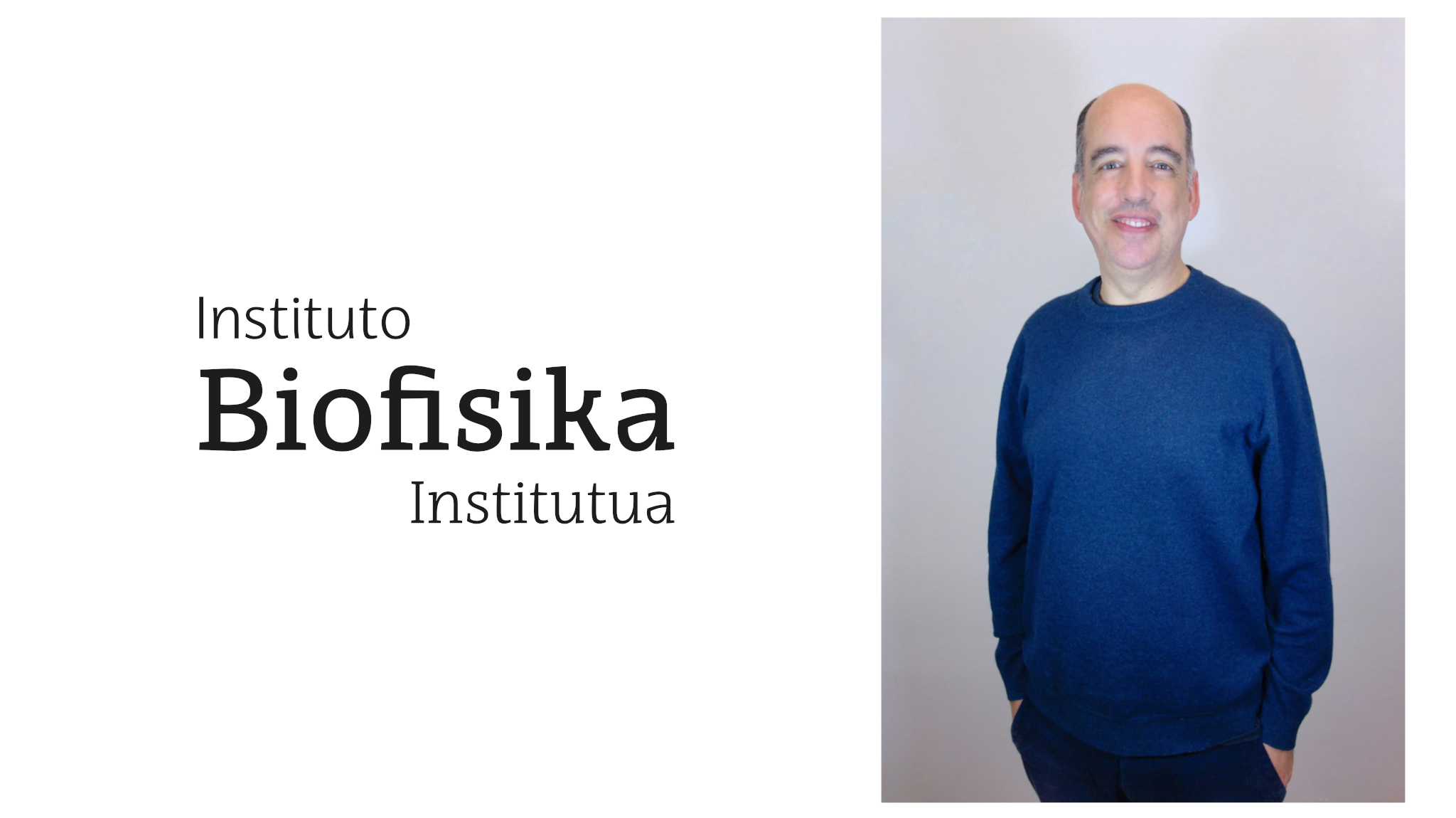
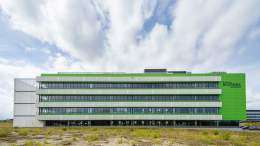
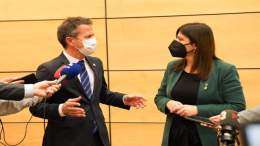
The Biofisika Institute (CSIC, EHU) welcomes Sergi Padilla, who joins the center as an Ikerbasque professor. Sergi comes to Biofisika from King’s College London (United Kingdom) and brings a solid international background in biophotonics and the biophysics of interactions between pathogens and host cells.
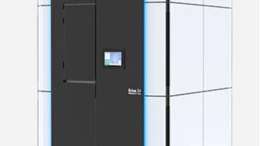
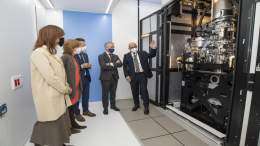
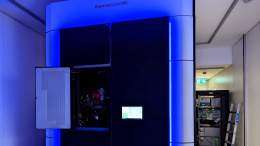
His appointment will strengthen the Imaging-Empowered Multiscale Biophysics program, while also enabling the launch of a new research line in cryo-photonics, a strategic area for developing and enhancing the institute’s capabilities in cryo-correlative light and electron microscopy (cryo-CLEM).
Sergi Padilla studied chemistry at Lund University (Sweden), where he earned a master’s degree with honors in 2005. He subsequently worked as a research assistant at the Niels Bohr Institute in Copenhagen (Denmark), developing mathematical models applied to biological systems under the supervision of Kirstine Berg-Sørensen.
In 2006, he received a Marie Curie fellowship to pursue his PhD at the Institut Jacques Monod in Paris, which he completed in 2009 under the supervision of Marc Tramier and Maite Coppey-Moisan. His doctoral thesis focused on the development of advanced fluorescence lifetime microscopy (FLIM) methodologies for the study of host–pathogen interactions. In collaboration with Guy Tran Van Nhieu, he analyzed how actin dynamics are altered during Shigella entry into host cells, establishing a distinctly interdisciplinary profile that combines mathematical modeling, advanced microscopy, molecular biology, and live-cell imaging.
After completing his PhD, he joined Emory University (Atlanta, United States) for a postdoctoral fellowship in Gregory Melikyan’s laboratory. During this period, he investigated retrovirus entry and fusion using time-resolved fluorescence microscopy, demonstrating that the ASLV virus utilizes distinct endosomal pathways depending on the cellular receptor. He also delved deeper into the study of HIV-1 entry and fusion, incorporating advanced techniques such as real-time tracking of individual viruses and functional viral fusion assays. During this phase, he also maintained a collaboration with Biofisika, working with José Requejo, which strengthened his ties to the institute.
Sergi Padilla subsequently established his own independent laboratory thanks to a Leadership Fellowship from the Nuffield Department of Medicine at the University of Oxford (2013–2020) and the award of an ERC Consolidator Grant (2020–2026). His team focused on studying the fusion mechanisms of enveloped retroviruses, particularly HIV, using live-cell and single-molecule imaging approaches. Among other advances, his group helped resolve the debate over where HIV fusion occurs, demonstrating that it takes place at the plasma membrane in T cells and in endosomal compartments in macrophages. In collaboration with Mark Bowden’s laboratory, he also determined the temporal stoichiometry of the HIV fusion process in living cells.