


Sugar Detected in Interstellar Space for the First Time
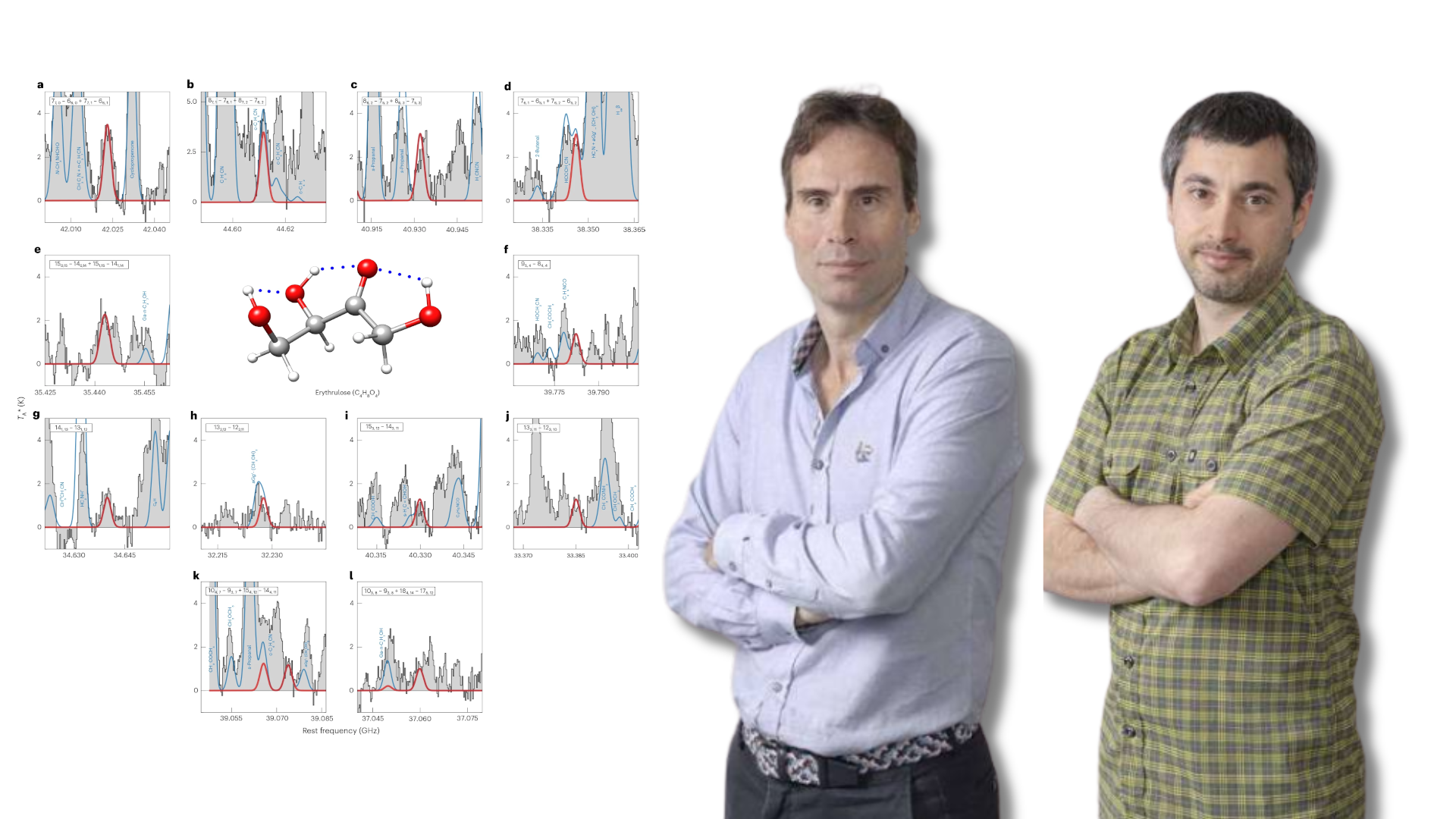
An international research team, with participation from the Biofisika Institute (CSIC, EHU), has detected a sugar in the interstellar medium for the first time. The finding, published in *Nature Astronomy*, identifies the presence of erythrulose in the molecular cloud G+0.693-0.027, located in the Galactic Center region, and provides new insights into how certain molecules relevant to the origin of life may have formed in space.
Erythrulose is a four-carbon sugar. Its identification represents a significant advance in astrochemistry and astrobiology, as no sugar had previously been detected in the interstellar medium.
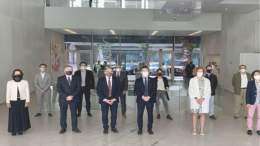
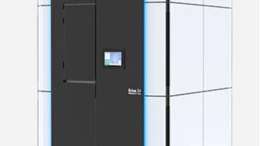
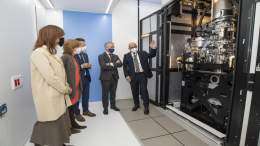
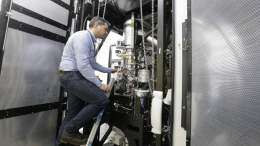
The study includes researchers from the Biofisika Institute, Emilio J. Cocinero and Aran Insausti, who specialize in rotational spectroscopy of molecules in the gas phase. Their work provided the laboratory data needed to identify erythrulose in space. “Each molecule has its own spectroscopic pattern, like a fingerprint. If it isn’t known beforehand in the laboratory, it’s not possible to identify it with certainty in astronomical observations,” explains Cocinero.
Detection in One of the Galaxy’s Most Molecule-Rich Regions
The detection was made in the molecular cloud G+0.693-0.027, one of the regions of the galaxy richest in complex molecules. To do so, the scientific team used ultra-sensitive observations made with the 40-meter Yebes radio telescope in Guadalajara and the 30-meter IRAM radio telescope in Granada, along with laboratory spectroscopic data essential for interpreting the observed signals.
One of the most striking findings of the study is that erythrulose is significantly more abundant than other simpler sugars, which, however, have not been detected in this region. In particular, its abundance is at least eight times greater than that of three-carbon sugars, which remain unobserved.
This result suggests that certain chemical processes in interstellar space may favor the formation of sugars that are more complex than previously thought.
New Insights into the Origin of Life on Earth
Sugars are molecules essential to life. They serve as energy sources, form part of key structures such as RNA, and play a role in numerous biological processes. However, their formation on early Earth under prebiotic conditions continues to present significant experimental limitations.
The new study reinforces the possibility that part of the sugar inventory available on early Earth was first formed in space. These molecules could have been generated in the interstellar medium and subsequently reached our planet embedded in meteorites, comets, or asteroids.
Furthermore, in aqueous environments, erythrulose can isomerize into other sugars, which reinforces its potential role as a precursor in chemical pathways of prebiotic interest.
How Complex Molecules Form Beyond Earth
The results also show that erythrulose can form efficiently in interstellar dust grains from simpler molecules, such as aldehydes and two-carbon alcohols.
Such processes reinforce the idea that the interstellar medium acts as a veritable chemical factory, where increasingly complex compounds are synthesized even before planets form.
The detection of this sugar opens up new avenues of research in the search for prebiotic molecules in the universe and in the study of how they might have been incorporated into young planets such as early Earth.