


May 24: National Epilepsy Day. A molecular key that protects the brain: how the Biofisika Institute is researching neonatal epilepsy
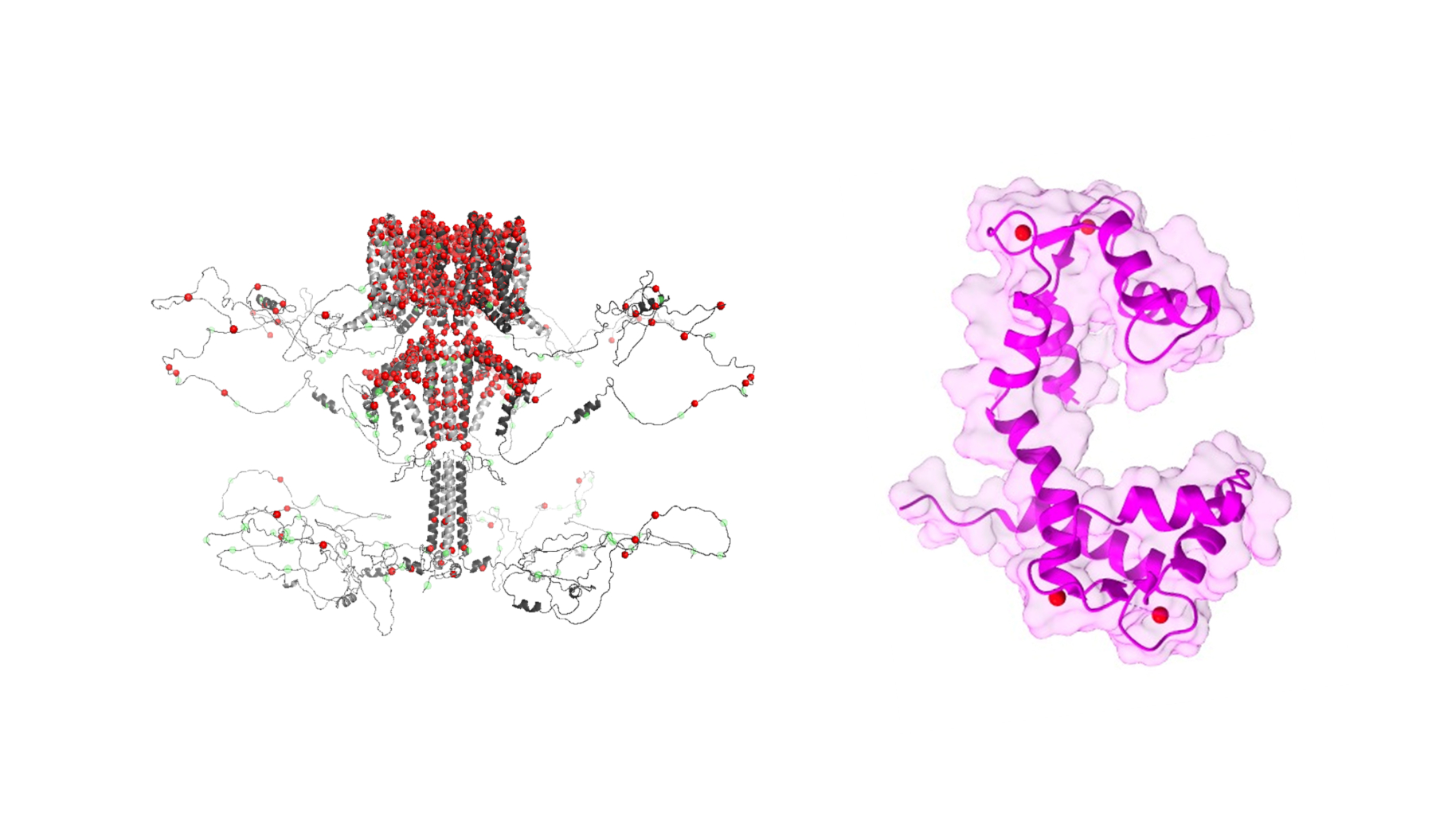
The brain functions thanks to electrical signals that allow neurons to communicate with one another. The KCNQ2 gene is one of the components that makes this process possible”
As part of National Epilepsy Day, the Biofisika Institute (CSIC–UPV/EHU) highlights its research on the KCNQ2 gene, which is responsible for a rare and severe form of epilepsy that manifests in the first days or weeks of life.
This neonatal epilepsy causes very early seizures that can interfere with brain development. The KCNQ2 gene encodes the Kv7.2 protein, an ion channel—a small molecular gate—that regulates the electrical activity of neurons and helps prevent their excessive excitation.
To understand how it works, you can imagine this channel as a two-position faucet handle. In the first position, the channel is primed but barely allows any current to pass through. Only when turned to the second position does the faucet open, allowing a flow of potassium to pass through, which calms the neurons and stabilizes their activity.
The team at the Biofisika Institute has discovered that cells themselves can influence this switch. Through the redox signal—molecules that cells naturally produce during their normal metabolism—the channel can skip the first step and go directly to its active state: the tap opens with the very first turn.
To understand the significance of this “redox signal,” it helps to take a step back. Chemical reactions occur continuously in our cells to generate energy, and in that process, small reactive byproducts appear—something like chemical sparks. The brain has natural defenses to keep these sparks under control; this balance is normal and necessary. But when it is disrupted (a condition known as oxidative stress), the imbalance has been linked not only to epilepsy but also to diseases such as stroke, Parkinson’s, and Alzheimer’s. Therefore, understanding how the KCNQ2 channel responds to the redox signal may have implications that extend beyond this rare form of neonatal epilepsy.
This seemingly minor change in the tap handle has profound consequences: it facilitates a greater stabilizing current from the outset, helping to maintain the brain’s electrical calm and protecting it from potential damage.
“The goal is to understand precisely how these channel transitions are regulated and how they influence the stability of the brain's electrical activity,” explains Alvaro Villarroel, a researcher at the Biofisika Institute.
Identifying exactly which parts of the channel respond to this signal opens a direct path to more precise drugs: instead of acting on the nervous system in a generic way, they could target the specific mechanism that is failing. Tools such as artificial intelligence and computational modeling help accelerate this process by simulating how these molecules interact even before any compounds are synthesized.
The team is also studying regulatory proteins such as calmodulin, which work with Kv7.2 to control neuronal excitability. Understanding how they coordinate under normal conditions is the first step toward understanding what goes wrong in epilepsy.
In this work, postdoctoral researcher Sara Alicante has played a key role in identifying the redox regulation mechanism and the additional genes involved in its control.
“Our work aims to understand how these molecular components fit together, when their function is disrupted, and how that might contribute to different forms of childhood epilepsy,” Alicante explains.
Behind this research are families as well. The KCNQ2 Foundation brings together parents of children affected by this rare form of epilepsy, who have spent years raising awareness about the disease and funding scientific projects that would otherwise lack resources. Their work and that of teams like the one at the Biofisika Institute move forward in parallel, because basic science and family activism need each other.
Only by precisely understanding how a healthy brain works is it possible to detect where and why it fails in epilepsy. That is the path this team is following: going to the smallest level—a protein, a chemical signal, a turn of a key—to understand the bigger picture.