


A key discovery reveals how neurons recycle a nutrient essential for brain communication
- A study led by researchers at the Biofisika Institute (CSIC, EHU) has uncovered a conserved molecular mechanism that explains how cells transport choline, a molecule essential for brain function.
- This breakthrough opens up new avenues for understanding neurological disorders and developing future therapies.
The human brain relies on precise communication between neurons to function properly. A key element of this process is acetylcholine, a neurotransmitter essential for memory, learning, and muscle control. To produce it, neurons need to efficiently take up and recycle choline, an essential nutrient found in all forms of life.
A multidisciplinary research team, with significant participation from a group at the Biofisika Institute (CSIC, EHU) led by Ikerbasque researcher Igor Tascón, has succeeded for the first time in describing, in great detail, how choline crosses the cell membrane and enters the neuron. The study was published today in the prestigious scientific journal Science Advances.
A “molecular gate” shared by bacteria and humans
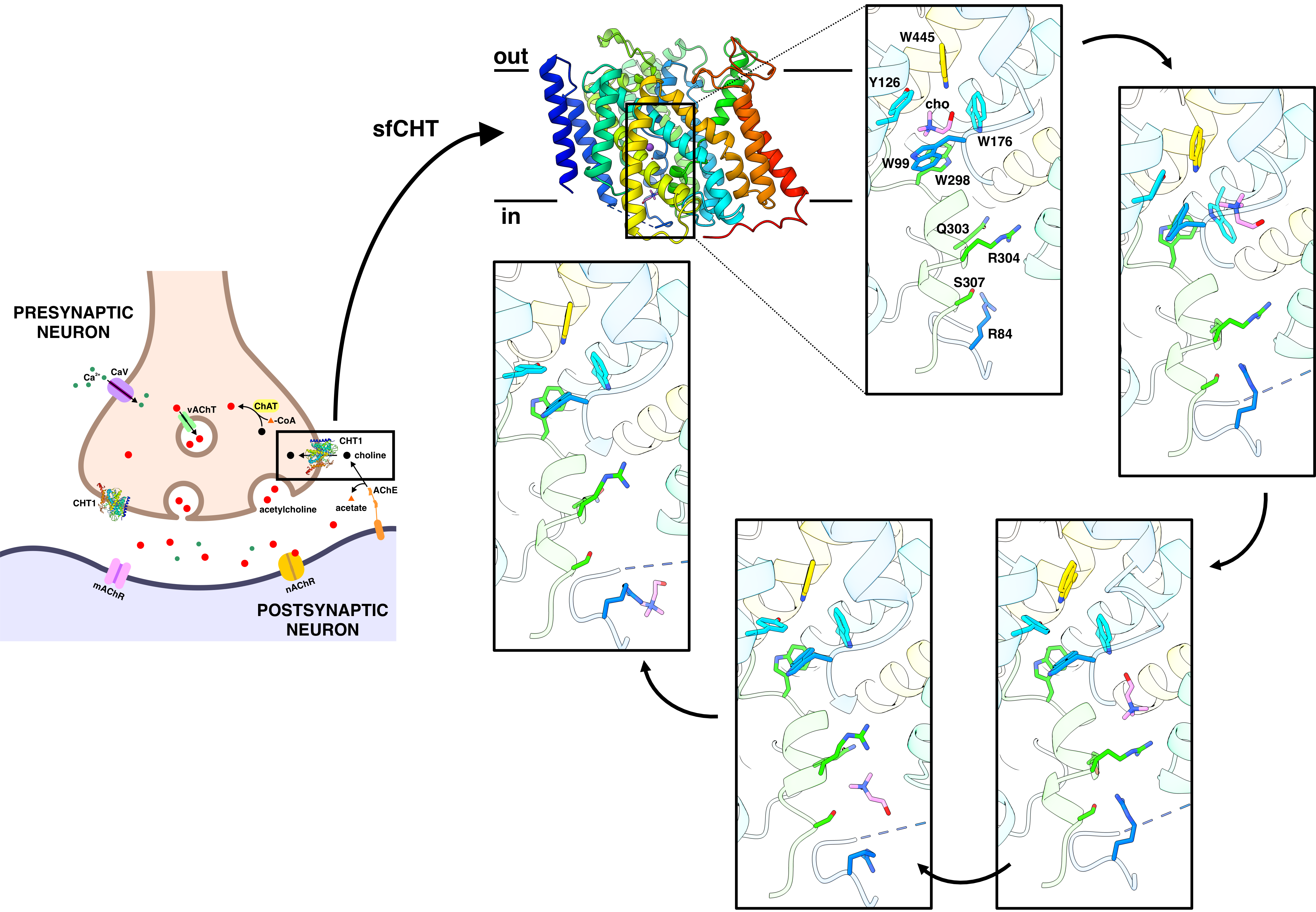
The study demonstrates that both bacteria and human cells use a surprisingly similar mechanism—one that has been conserved throughout evolution—to transport choline. Specifically, the team has identified a series of coordinated movements within a transporter protein that acts as a true molecular gate, guiding choline from outside the cell until it is released inside.
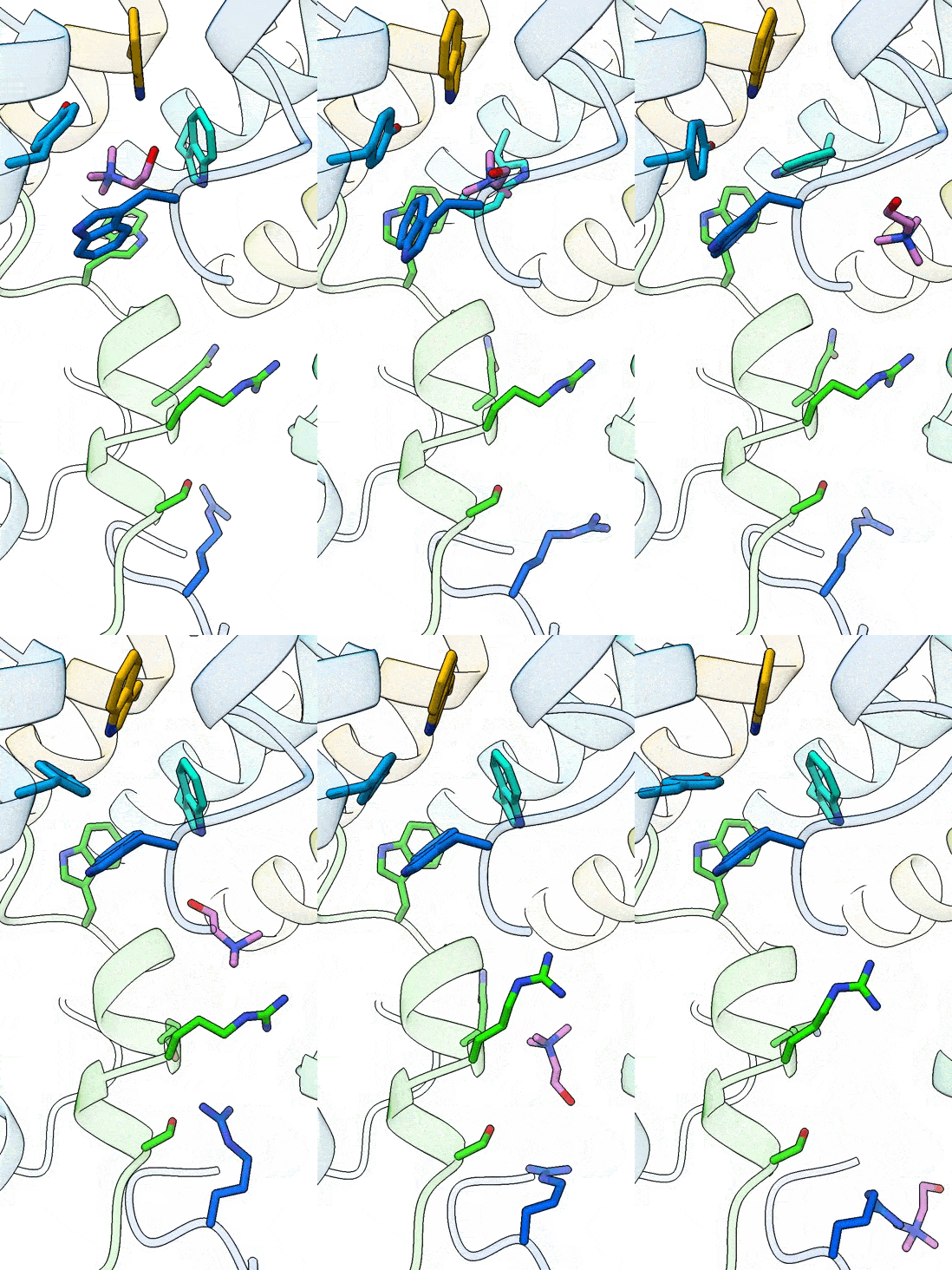
To reach this conclusion, the team combined high-resolution cryo-electron microscopy, computer simulations, and functional experiments. Thanks to this strategy, they were able to “capture” snapshots of the transporter in full operation and track the choline’s path through the protein step by step.
A Key Discovery
Understanding how choline is transported is crucial, as this process is directly linked to the production of acetylcholine, a neurotransmitter essential for numerous cognitive and neuromuscular functions. Abnormalities in this system have been linked to neurological and neurodegenerative diseases, such as certain movement disorders or cognitive development disorders.
Furthermore, the fact that this mechanism is shared by organisms as diverse as bacteria and humans indicates that it is a highly efficient biological solution, conserved over millions of years of evolution.
“This finding allows us to better understand a fundamental process of neuronal function and provides a solid foundation for exploring new therapeutic strategies in the future,” notes Igor Tascón.
A breakthrough with implications beyond the brain
Although the study focuses on a key process in the nervous system, its implications extend far beyond that. Choline also plays essential roles in cellular metabolism and in bacteria’s adaptation to extreme environments, making this discovery a significant breakthrough for both biomedicine and basic biology.