

A Basque consortium of researchers is studying why mutations in a certain protein alter brain development in children with a rare disease
The Biofisika Institute (CSIC, EHU) and several Basque institutions are studying CTNNB1 syndrome, a rare disease linked to alterations in the beta-catenin protein.
Although fewer than 50 cases of this syndrome are known in Spain, rare diseases affect a total of nearly three million people.
On the occasion of Rare Disease Day, the Biofisika Institute (CSIC, EHU) presents the progress of a project aimed at understanding the molecular origin of CTNNB1 neurodevelopmental syndrome, a rare disease caused by mutations in the beta-catenin protein. Although fewer than 50 cases of this pathology have been diagnosed in Spain, rare diseases affect a total of nearly three million people.
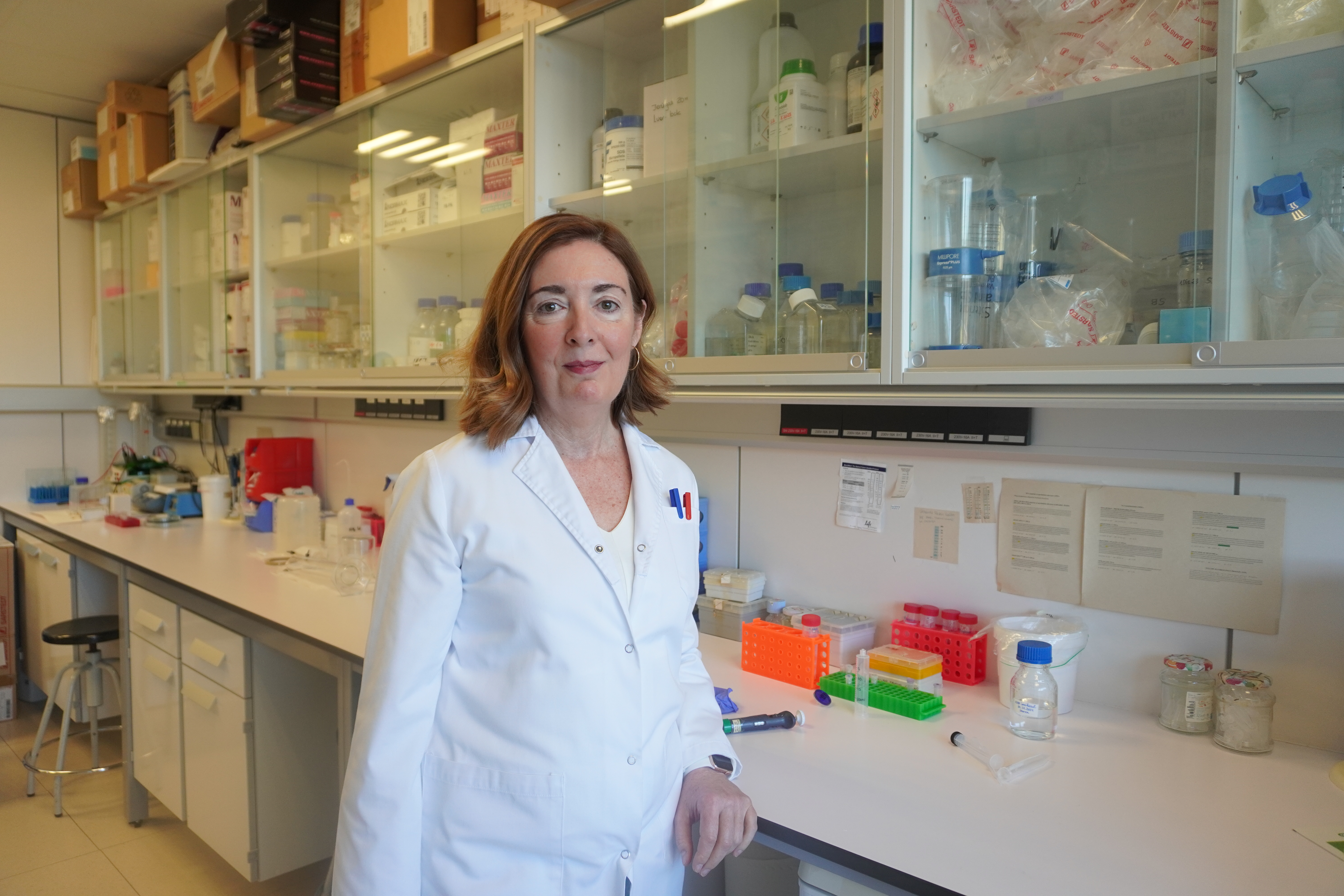
The study is conducted with the participation of Sonia Bañuelos, a researcher at the Biofisika Institute and lecturer in the Department of Biochemistry and Molecular Biology at the University of the Basque Country (EHU).
“Our goal is to understand how these mutations prevent the brain from forming correctly. Understanding the mechanisms at the molecular level is essential so that specific therapies can be developed in the future,” the scientist emphasizes.
The project is being carried out in collaboration with a neuropsychology team from the University of Deusto—pioneers in the study of the disease—molecular genetists from the Biobizkaia Institute at Cruces University Hospital, and the brain organoid platform at the Achucarro Neuroscience Center. The Spanish Association of CTNNB1 Patients, based in Bizkaia, is also actively participating in the initiative.
A key protein for proper brain development
Beta-catenin is essential during embryonic development and also in the adult organism. One of its functions is related to cell adhesion, which confers consistency and mechanical strength to tissues. These processes are fundamental during brain formation and in the stablishment and plasticity of synapses, the basis of learning and memory.
In CTNNB1 syndrome, most mutations generate incomplete or misfolded proteins that cannot perform their function. This malfunction alters critical processes in brain development.
AI, biophysics, and brain organoids to study a rare syndrome
The team at the Biofisika Institute uses tools based on the three-dimensional structure of proteins to predict how these mutations affect the interaction between beta-catenin and cadherin, key components of cell adhesion complexes.
The predictions are verified in the laboratory using biophysical techniques. To do this, mutated versions of the protein corresponding to real cases identified in the Spanish cohort are produced in bacteria. Brain organoids allow for more accurate modeling of how these alterations impact the development of nervous tissue.
Although this is basic research, the results “could help in a future development of rational designed therapies,” says Bañuelos.
Supporting research into rare diseases
“Understanding the mechanisms of a disease is the first step towards finding a cure. That is why research on rare diseases is necessary,” the researcher stresses.
On the occasion of Rare Disease Day, the Biofisika Institute recalls the importance of promoting research on these minority diseases, which have an enormous impact on those who experience them firsthand.